Wednesday, October 13, 2010

Final Week of a Sabbatical Year -- Week 52


Good, good, good, good vibrations!
(I'm talking bout excitations!)...
Gotta keep those lovin'
vibrations happening, yeh!

(The Beach Boys)


Vibrancy is vibration.
Rural: earth.
Rest and Renewal: sabbath and play.

Birds,
y la gente muy amable,
shaking
core culture
words
loose
lazy
breathing away
worry;
drenched in beauty!

Ready now
for Lily and the children
to grow me slow
miraculously
here.

Barns beckon.
Empty spaces.
Stories untold.

Adios, y gracias,
muchas, muchas gracias,
Costa Rica y Ticos, all;

and to you,
Ankor of Cambodia,
comfort.

Now is only
beginning
again.

And again.

Week 51: Saint Joseph's Barn (St. Joseph County, MI)


I began barn interviews in earnest this week with Saint Joseph's barn. This centennial barn, built in 1898, began its make-over twenty five years ago. It is the central retreat space for The Hermitage on Dutchsettlement Road, Three Rivers, MI.

David Wenger shared how a "chance" visit to this barn, eleven years ago, resulted in the call to move here from Washington DC. He and his wife Naomi are the co-directors.

"The spiral staircase is at the center of the character of St. Joseph's barn. As I go up and down it daily, cleaning, preparing rooms for guests, it reminds me to 'be still.'"

When David said this in our interview it made no sense to me. The narrow metal spiral is resoundingly loud under my footsteps in a place soaked in silence. I have always been terribly self conscious when walking on it when I am a retreat guest here. Clong! Clong! Clong!

The mystery was resolved on Sunday when the Wengers shared about their ministry in worship. Naomi shared the secret:

"David has practiced going up and down the spiral staircase silently, letting each foot fall gently and soundlessly on the steps. It is a kind of spiritual discipline."


Ah! Yes, now I see...er...hear. Such is the invitation of an old barn, an old soul, tending old souls of prayers who come away here -- to space made for God.

One more week of vibrant rural blogging to go as the liturgical and sabbatical year comes to a close.

peace and silence to all.

More on St. Joseph's Barn will be shared at storybarn.blogspot.com

Week 50: Bristol Fruit Hills "Barn" Rising


After almost twelve month of a “sabbatical year” it is still the rising sun that takes my heart away. As I drive east on County Road 23, it finds me, glowing, rising over what used to be called “the fruit hills” on the east side of State Road 15. In its midst I see rising the skeleton of a barn! What?

Though I am running late for my first meeting of the day, I make a U turn at the intersection of 14 and 15 and go back to find just that angle, just that moment, when the barn – was it a barn? – was illuminated by the golden sun.

Turning around and coming back toward the sun, I ease off the side of the road and put on my emergency blinkers. Camera is on, ready. But now the sun is blazing higher, and my camera lens only makes its rays stream to the forefront of my view. I shoot and shoot through the small branches along the side of the road, zooming in and out, adding and subtracting light, trying to re-capture that moment when the roof beams perfectly held the sun. But now the sun shades the beams. I cannot see them.

Was it a barn? Who would build a barn? It looked like a barn. It was tall, taller than anything on that hilly side. The roof beams were above the crest of the hill. Wouldn’t it be wonderful if it were an apple barn?

I fantasize and remember the days twenty five years ago when we brought our small boys to pick apples just there, and to taste fresh milled cider. It was always one of the most delightful days of fall.

That was before growers were afraid of the liability dangers of ladders in apple trees. That was before apple blight robbed the harvest. That was before plastic bags of apples from Washington state or China were so much cheaper than Indiana and Michigan apples and “wise consumers” bought apples only at large supermarkets and no longer family orchards and roadside stands. That was before apple trees were left un-pruned and the weeds grew up around them. That was before apple barns were taken down so that new housing could be built. That was before State Road 15 needed to become wider, with turn lanes, for the new homeowners to reach their new homes.

I took my camera and its photos and sped to my meeting, leaving barn dreams behind.

Mid-afternoon I came home on State Road 15 and pulled off the side of the road across from the “barn.” I got a better look at the structure of the open wooden beams. Is it a barn? Wouldn’t it be exciting if it were a barn? Would one of the big home owners be building a barn? Why?

I pulled out and turned left on the nearest side road to try for another view. Turned in the drive where the home construction company had its sign. Saw the green security gate that would not let me near this – home.

All illusions now gone, I realized this huge home fit perfectly into the “neighborhood.” HUGE home. Larger than a barn. With beams just as tall, but maybe not just as strong.

Why am I captivated by barns, willing them into the sunrise?

When on earth on fertile fields did homes stand taller and larger than barns? And what were these homes to hold? Feed? Living things? Well, maybe a few humans. And why must they cut the apple trees down and plant the trees they think should live here around here.

Judson's Apple Stand is still on State Road 15, on the opposite side of the barn that is no barn. I have never stopped there. I should.

Week 49: Soul & Soil Creates Hilde-Garden


Harvest! Mary Grace, Karla and Donna

Karla Kauffman bought a farm. E-I-E-I-O! And on that big centenniel farm...she decided to grow people. So she invited women in ministry to come for one morning a month for a retreat called Soul and Soil...

...and to cultivate a Hilde-Garden. A what?

For the last nine months a group of six women have gathered on the third Thursday to follow the Benedictine rhythm of study, prayer, work and a common meal. Karla was inspired by the writing of Hildegaard of Bingen.

Hildegaard (1098-1179) was a medieval woman of many talents: Benedictine abbess, theologigan, visionary, poet, composer, gardener, chef, healer. Karla opened to us her visions and the artistry that portrays them. Alongside we studied the contemporary mystic, Gunilla Norris, and read her book, A Mystic Garden. And we took a close look at soil.

After study, silence. Ah!

After silence, garden work. Creating a Hilde-Garden by following her lists of recommended plants. Well, easier said than done.

#1 This was a brand new garden. Yikes! Where do we begin?
#2 Weeds needed removing, an old wall rebuilding, and soil improving.
#3 And how do you find medieval European herbs in 21st century Michigan?

With rosie cheeks we proceeded. Weeds, be gone! Plants were found. A lovely new rock retention wall was grounded.

That first Thursday in April we were rewarded with butternut winter squash souffle, a salad of early nettle greens and dandelion flowers, and dessert of wintered over apples. Ah! beauty, food, fellowship after study, silence, sweat, sweetness, and smooth earth ready for plants and seeds.

So, here we were today, on a rainy October day, seven months later. We pondered Hildegaard's vision of the circles of heavenly beings, drawing all creation toward celebration and justice. We paused in silence and conversation and ponder Hildegaard's words:

Everything that is in the heavens, on the earth, and under the earth, is penetrated with relatedness. (Hildegaard of Bingen, Skiveas)

October Harvets! Parsley, sage, borage (for courage...but what do you do with borage?), onions,some last beans and green tomatoes.

For lunch, after an appetizer of butternut squash soup with carmelized sage, we had fried green tomatoes with cranberry and walnut muffins and fresh Honey Crisp apples.

As we left this season of retreats and gardening together, Karla brought a basket full of Hilde-garden butternut squash up from the basement of her old farm house to share with us. I took a sprig of sage to carmelize as well.

Maple Tree Meadows, Karla's farm, has been growing people, me, these last months. Before and after sabbatical trips to Costa Rica, these times kept my hands in Michigan soil. We marked the seasons in earth, herbs, and good eating. At at harvest time, we remember abundance:

We do not bear fruit for ourselves. We bear fruit for lfe itself.(Gunilla Norris, A Mystic Garden)

Now, entering a fallow time, we await the return of perennials and new seeds and sproutings.

Thanks to Soil and Soul-Mates Karla, Kathy, Mary Grace, Becky, and Donna.

Week 48: First Barn begins to speak


On Sunday afternoon, October 24, I did my first "barn tour." I made a handout to introduce myself. I had my camera. I had the map provided by Glenn that would help me find some of the barns that his grandfather, George Scherck, had built in the 30's and 40's. The hunt began.

I found a barn on Lutz Road right away. Strong. Newly sided and roofed. And standing alone. This is surely a George Scherck barn with its hip roof, tall.

Hmmmm.... No house on that lot, so I crossed the street to tap on the door. No answer. (This no answer pattern was repeated for most of the day.)

So I left my handout in the door and took a very few photos, and headed on, in each case.

On the corner of Sevison one block from the church, the homeowner was home. So I had the privilege of taking my time walking around and taking photos. What a joy!

But best of all was the last barn of the day, on the Constantine Road near where the bridge crosses over the river. The owner was out by the barn.

Rod was a gracious host. He told me what he knew of the history of the George Scherck barn and the other buildings, walking around in each one. He even called his thirty cats to come to dinner just so I could enjoy the rush of all of them scrambling around my legs to their special "cat room" in the barn, complete with a tiger striped throw on the cat couch!

And I looked, wondered and gathered beauty in my little camera.

The leaves were still orange and gold above the corn stubble. The barns each had their high hip roof glory. But to talk to Rod, to begin the Story Barn, was best of all.

I sense that the year ahead will be an adventure in homegrown history, old timbers, and cats. What could be better.

I promised Rod I would come back for more.

Week 47: "Country Roads, Take Me Home"


I left on Saturday, October 16th, for the twelve plus hours drive to North Carolina. My dad had emergency surgery. He had a dire infection. It was a long ride.

As I drove I listened to Neena Ellis' interviews of centenarians from her book "If I live to be 100." What incredible people! And what was becoming of my Dad this very day?

How gratefully I listened to the end of her reading on my return trip on Friday, October 22nd. After a painful and complicated week of recovery for my father, he was finally starting to feel better. He said, "Well, after my near death experience, I think I can buy a new car." So I could return home in peace and gratitude for the 85 years of his life and his strong heart and spirit. His new life all over again.

As I neared Indiana I loved route 177. I heads out just north of Cincinnati going northwest to Richmond, IN through large, open fields. Most of the corn and soybeans had been harvested. But I did see one combine kicking up dust into the late day sunlight.

And I felt so at home. Open roads. Farms. Old barns. Autumn dusky glow in the sky and across the fields. Vibrant rural beauty to heal the soul.

Week 46: More Barns


Barn encounters are coming my way.

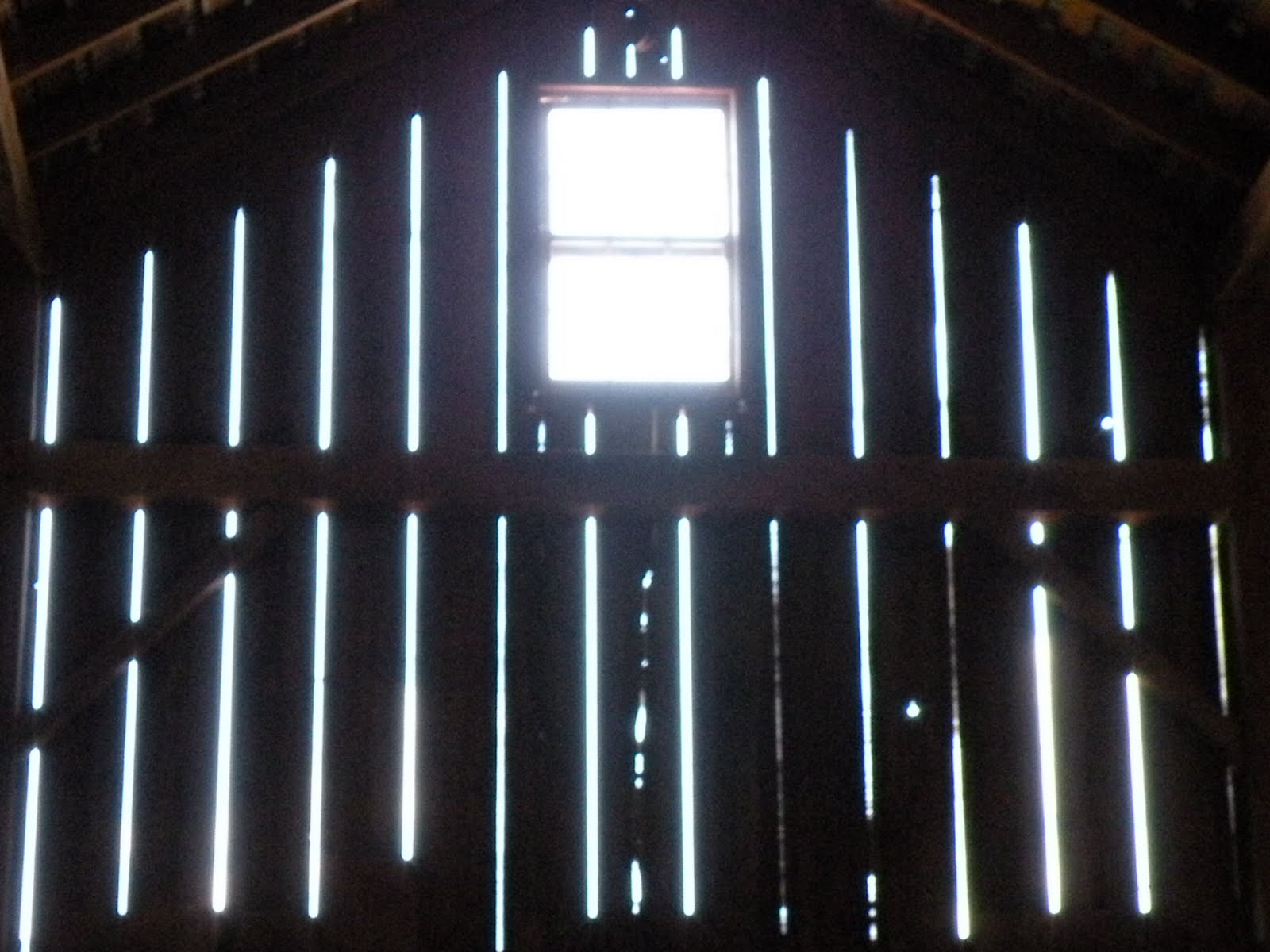
I took the photo above at Art in the Barn, a show in the old barn at Hoke Farm, Goshen. My daughter-in-law had four drawings displayed. The old barn had been modestly remade as the perfect gallery. I loved it. More on that another time...

But even more I love my encounter with another barn lover on Saturday morning at 11:46 am, by the pomegranates in Kroger in Goshen.

A man beside me asked, "What do you do with those things?"

"Salsa," I said.

"Salsa! I am 92 years old! We never had salsa."

"...Do you know what salsa is?" I asked respectfully.

"Of course I do. My grandchildren tell me about these things."

This evolved into a long, long conversation where I learned that he had farmed, lived in Florida, driven RV's, and in that job, brought back such strange fruits as pomegranates. It was clear that we could have stood by those pomegranates talking for a long time.

With my barn project in mind, I asked, "Where was your farm?"

"In Florence township." (That's where my church, Florence Church of the Brethren Mennonite, is!)

"Where?" I exclaimed.

"On Banker Road."

"Where?!"

"Banker and Engle." (Really!)

"That's right by my church, the church where I am a pastor."

At this his hardness of hearing seemed to kick in. "What?" Putting together a woman pastor, Florence township, and the church he knew as Brethren was a stretch.

Well, when all was said and done, a good thirty or forty minutes later, I had learned that he was the first seed corn farmer in Florence township, that he knew many at Florence Church, and that he loved to talk and tell stories.

We exchanged business cards. Yes, this 92 year old has business cards in his wallet. I promised, with great joy, to call him so that we could talk more about barns and farming in St. Joseph County.

"Why are you doing this barn project?" he asked.

"Well, I'm an urban girl who is now a rural pastor. I want to learn about farming and its history around the church."

"Where were you born," he asked.

"Philadelphia."

He smiled and shook his head. "You have a lot to learn!"

Wednesday, October 6, 2010

Week 45: Barns


I am percolating a project. I want to hear the stories of local barns. Barns as icons. Barns as embodying the changing culture and legacy of farms and farming.

As an urban pastor in rural ministry, part of my draw to barns is that I know nearly nothing about them, really. Yet, somehow, I love them.

But, true confessions: everything I know about barns I learned in kindergarten.

Old McDonald had a farm – and it was a barn, the farm was.

In the barn were cows and calves, pigs and piglets, horses and colts, hens and roosters and chicks, sheep and lambs, etc., I suppose each in their adjacent stalls. And why? I don’t know, just because animals are nice and warm and fun and make great noises? (The connection between animals in a barn and raising food was never made.)

And Jesus was born in a barn.

And in that dark barn far away there also was a cow, a sheep, a dove, an ox, and a lamb, all co-existing and making soothing noises for a baby to sleep by.

Growing up I never knew a farmer or went in a barn. There was an old structure behind our “old house” (when I was a small child), that I called a barn. And I imagined having my own horse in it. But I have no memory of ever going in this structure. It stood old and empty and longing.

My cousins old, old house in Germantown (Philadelphia) had been the barn where, they said, George Washington's horse slept. But I never, never, pictured it in any way as a barn. That was just a quaint thing to say, I guess.

In college I had a chance to connect with a barn. The first farmer I knew was a Mennonite farmer’s son I met when I was twenty. After his father’s death their Lancaster, PA farm was being auctioned off after seven generations of family farming. He grieved in a way I could not feel. I never saw the barn.

And now? I now have friends who have all kinds of barns.
 A centennial barn that stands empty but for storing the yacht of a friend.
 Huge pole barns that house huge equipment for seed corn farming.
 A small pole barn on an organic market farm that houses a few sheep and cattle.
 Two barns that have been re-constructed as homes, and another as a retreat center.
 One small white barn that was sold recently to a young Amish family.
 One old, dark barn that hosted a dance once, but I had too much fun dancing and never really looked around.

I have not explored barns. I don’t know what they are used for – really. I don’t know the kinds. Or how they are built. I don’t know what it takes to keep an old barn alive.

I don’t know why I love barns. Why my heart goes out to barns. Why they comfort me, even the old falling down ones, as they stand on the corn field across my long driving view. Why they draw my eye.

I ponder such American icons -- wondering if barns are sanctuaries of the land, like country churches are sanctuaries for the people.
I wonder if we know, deep down in our collective earthling consciousness that such shelter is necessary, such honoring essential, for our survival on the land and with the animals. I wonder if barns stand in the gap between the wild, wild world and our domesticated allusion of everlasting abundance, the cultivation of crops, of our daily bread.

Barns seem to me shelters of the presence of God on field horizons, keeping us safe in storms and fed in the cold, holding a warm place between heaven and earth.

And it appears that barns are dying.

Sunday, September 26, 2010

Week 44: Migration and Immigration


Migration and Immigration. How can one thrill the heart and the other weigh down the soul?

My eye is drawn daily to light and wings. At dawn a small flock of sandhill cranes pecks about a harvested corn field, backlit by rays of heaven, streaming and raising steam. At dusk dark shadows of flocks line up the length of power lines, facing the setting sun. Is this their form of prayer? These changes in time and season, in flying from one home to the next and back again, evoke wonder.

Changes of immigration law evoke dread. My friend, Gwen, described walking through the desert where many immigrants cross from Mexico to Arizona.

"There is nothing simple about immigration as it stands in these days. From a legal point of view there are no easy answers at all. But I am responsible for God's point of view. And there is only one answer in scripture for the stranger and the neighbor. That answer is welcome and respect."


If laws pass that make it a crime to aid immigrants without legal documentation, then our whole congregation could be sent to jail. Maybe that would be a good thing. Thirty eight states are considering such lawas. But hopefully another way through the wilderness will be found.

This coming week includes Worldwide Communion Sunday. If only the communion could be honest and equal between the communions of Mexico and the United States, between Nicaragua and Costa Rica, between Uganda and DR Congo, that would indeed be a miracle. Until then, the Mexicans and Costa Ricans, and Africans and African Americans and Native Americans (and German, Irish, English, Finnish, French and Swiss Americans) in our little communion seeks to grow in joy and justice.

The birds may lift my heart. But it is brothers and sisters I need to lift my soul. The flock of One God of All.

Week 43: Rural Prisons and Hope


One measure of vibrancy is "passion for life." This fall our congregation is looking for signs of this passion within and around us.

Mark offered to share his passion with us. He is a member of a Florence family. And he is in prison.

But his imagination is not.

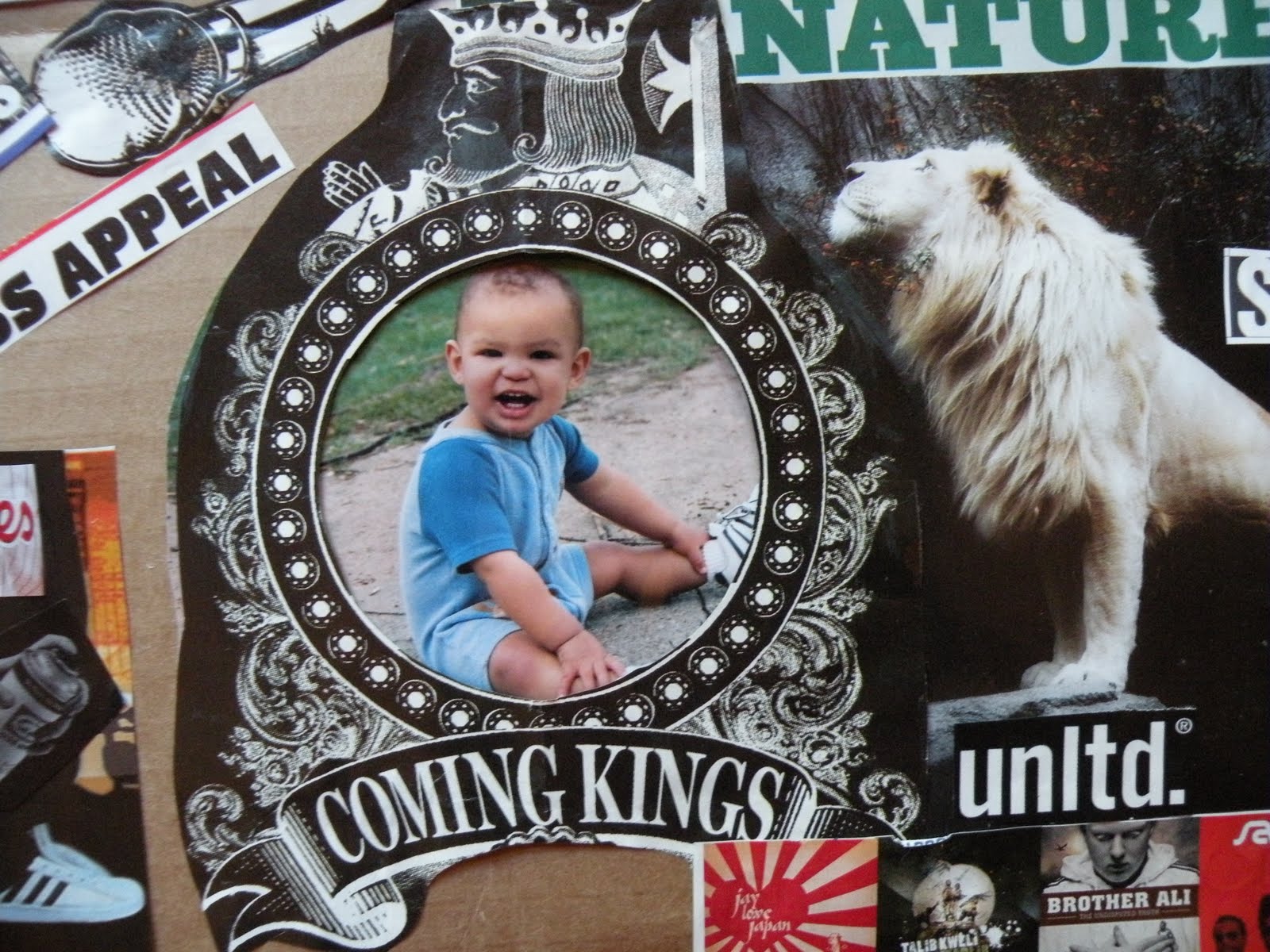
Through words, collages, drawings, and selected music, he gave us a whole new picture of what hope looks like for him, from behind bars.

Here are his words:

Passionate Light

To me passion is priceless. Paid for by living life. I was in prison -- so I never paid to go see passion of the Christ. True passion is always right. Fueled with white light. Which we can only visualize -- through holding our hopes tight.

My passion probably came to me through infinite veins. Long before my soul took hold. Long before I became a name. While in the womb hearing the rain. Internal patterns linked like chains.

Our passion often gets cut down to limited lover’s tales. The excuse for such things as Jarreds, De Beers, and Zales. True passion can fill sails. And free mental ships from docks. Trust me -- it’s been my passion, for life -- while I’ve been locked, that keeps me creating my happiness -- with the limited tools I’ve got.

True passion never announces itself. Instead you find it there. In the part of your true being -- that is as delicate as air. .

My passion


In the last five years I have learned that prison is very much part of the reality of rural life in the counties around Florence Church. So much humanity, locked up and hidden away. I have much to learn about the power of imagination that sustains and stretches hearts and minds behind bars, but toward a future of vibrant possibilities.

Week 42: Villa-Miller Farm Meeting


More than sisty farmers gathered at Villa Miller, the seed corn and soy bean farm of Martha and Henry Miller. They were there to hear about land conservancy for farm acreage. I saw a small handful that looked under fifty. What will happen to all the acres in soy beans and corn in the next twenty years. Henry fielded many questions about strip farming -- including other crops in alternate rows and allowing him to drill in his seed without disking the field.

The sense of vibrancy was well grounded. While options for certification of ecologial farm compliace was explained by the young extension service worker, the room was quiet.

Most of the evening was a new foreign language for me. I learned more, as usual, through pictures. I never knew that different parts of the root systems of the corn plant grew at different temperatures.

(Maybe this is why my vegetables never grow well in the pots on my back deck. Hmmmm...the earth gets warm quite quickly.)

As the setting sun glinted off Henry's massive machinery, farmers scattered, and then talked in twos and threes among the trucks and tractors. I would have loved to eavesdrop.

What does the farm world look like to these professional farmers who manaage worlds of mathematics and machinery to produce more per acre than has ever been produced before. What is the future of this kind of wisdom and skill in soil care?

When I asked a pastor/farmer what he thought the future of these farms would be he said,
"Oh, the big companies will buy all these corn and soy bean operations up and run them."


What might that look like? Who will tend Henry's well cultivated land?

Monday, September 6, 2010

WEEK 41: Water, Bread, & Wine (with room for ice cream for dessert)


Our Well Endowed Aunt Lilly provided for us – all fifty of us – a weekend of vibrancy.

Amigo Centre, our friend, was our host:
What is this place where we are meeting,
only a house, the earth its floor.
Walls and a roof sheltering people,
windows for light, an open door.
Yet it becomes a body that lives
when we are gathered here
and know our God is near.*

We had our own rooms, private baths, abundant food and hot coffee, blue lake, crisp air and clear sky. There were long trails through the marsh lined with marsh marigold and fringed gentian and visited by deer. We ventured in canoes and sailboats on the water, on nature walks and treasure hunts in the morning, conversing in the “passion booth” at noon, and reveling in popcorn, Karaoke, dancing and games in the night.

Time comes to a fullness.

When Suzanne led us in worship on Sunday morning it was to gaze out on the forest and the lake beyond as we sang “What is this place.” We breathed new air. We became a new body.

A body of Vibrant Life, given by amazing grace, we walked down to the lakeside for a baptism. We sang and danced the old Shaker tune, “’Tis a gift to be simple,” bowing to one another and to God in our circle of friendship and faith. Water gathered from the lake poured new life over Nora. And, “baptized into ordination for ministry” as the Church of the Brethren understands this rite, Nora served us the bread and wine of the living Christ.

Here we accept bread at his table,
broken and blessed, a living sign.
Here in this world, dying and living,
we are each other’s bread and wine.
This is the place where we can receive
what we need to increase
God’s justice and God’s peace.*

*“Here in this place” by Huub Oosterhuis
Dayenu! This would have been enough! But David suggested that we end our time with dessert at Ice Cream Heaven, the famous Nottawa Sand Lake Party Store – on Aunt Lilly. So we filled the place with a long line, more conversation, and piles of ice cream that dwarfed the cones.

David says, “Food is God’s love made physical.” What a sign of abundant love, that after two nights and most of three days together, huge brunch and dinner meals, lots of laughing, walking and playing together, we still had room for dessert!

Yes, the Commonwealth of God is like a Great Banquet,with room for dessert…AMEN!

Monday, August 30, 2010

Week 40: Vibrant -- "Lit up from within"


The text this Sunday was the Burning Bush (Exodus 3). On my drive to church I was struck at dawn by glory rays streaming through the clouds and trees over Constantine. I wondered, ”Did Moses catch this power surge as sun ran riot through a desert shrub? Would it be a less glorious appearance of God?”

“And, what is it that lit up Moses face, striking awe among desert congregation?”

“This ‘vibrant’ I am seeking in church and community. What is it, really?”

In Leaving Church, Barbara Brown Taylor describes the Presence of God as being lit up from within.

As hard as I have tried to remember the exact moment when I fell in love with God, I cannot do it. My earliest memories are bathed in a kind of golden light that seemed to embrace me as surely as my mother’s arms. The Divine Presence was strongest outdoors, and most palpable when I was alone. When I think of my first cathedral, I am back in a field behind my parent’s house in Kansas, with every stalk of prairie grass lit up from within. …Because I was not brought up in church, I had no religious language for what happened in that gold-lit field…Day by day, the practical implication of this feeling of communion was that I could not walk by a hurt thing without hurting too.
(Barbara Brown Taylor, Leaving Church (pp. 22, 23, 25)

She sees the light as well when it emanates from God’s human creatures. She describes her husband after a Sun Dance ceremony:

His face leaked light, as if every ray of sun that had landed on him that week had seeded his pores. Ed shone, and when he looked at me I felt the beam hit me in the chest across fifty feet of wet pasture.
(191)


These experiences left Barbara often in the dark at church in her role as priest. And it is a story I also heard, and felt for myself, in my own brief Exodus from church in Costa Rica. I only met one person there, Armando, my Spanish Intensive teacher, who was lit up by church. On the other hand, I saw light streaming from folks who had left the church behind, or on the side of their main stay of tending land, building community, and growing and eating good food.

How is God sparking up?

It seems in the USA we go to extremes to find the “lightning bolt” that has fallen into memory.

This week 40,000 people will go into the extreme environment of the desert of Nevada for Burning Man, to create a city of creativity and community, self expression and self reliance, no holds barred and no harm done, into be “lit up from within.”

This Sunday at Florence Church of the Brethren Mennonite we entered the old God story in the old way. Thirty five of us came to hear and imagine Moses’ conversation with the “I AM” from the burning bush. We took off our shoes in the presence of God, and we stooped low to wash one another’s feet. Then we were “lit up from within” as we recalled our own holy moments.

Martha recalled arriving in Cuba for a women’s conference, walking through the mud, and being met in the middle of the night by the women of the church who washed their feet. Tears flowed.

Fridbert remembered climbing as high as he could in trees when he was a boy, to be alone, to sway in the wind, to watch all the littleness below. “Sometimes we don’t know until later that we are having a God moment. When I was in those trees I did not know. Now I see.”

Jane and Nora and Dallie and Mary said living bare foot was their way of life. And I remembered that it was my mother’s way as well.

Don reminded us that our feet ground us in holy earth, as much or more than holy heaven.

So, I am not leaving church. I am longing for sparks, both within and out. It is conversations with God and the God World that light me up from within.

Then even a dust mote in the light sparks glory.

Thursday, August 26, 2010

Week 39: Lovely Michiana

Home of the Wenger Family at the Hermitage

A day of prayer at the Hermitage (Dutch Settlement Road, Three Rivers) was settling to my soul. The beauty of this place -- roll of hills, waves of grass, silence, but for the wind -- is both familiar and new.

Now I have a whole new set of questions to ask of my native geography.

We shall not cease from exploration
And the end of all our exploring
Will be to arrive where we started
And know the place for the first time.

T.S. Eliot -- "Little Gidding"
(The last of Four Quartets)

Tuesday, August 17, 2010

Week 38: Wildly Vibrant! (Is that a good thing?)


I am a bit unglued.

I have lived "geographically challenged" for the last nine years, since moving to our four acres on County Road 23. Before that time, for the first almost fifty years of my life, I lived in cities: Philadelphia, PA; Grand Rapids, MI; Elkhart, IN. But I still don't FEEL like a belong on CR 23, still don't know my neighbors, still feel like a rural visitor.

Add upon this layer a year of travels to cities and rural areas from Paraguay to Cambodia to Costa Rica and back, and it leaves a lot of sorting to do.

Where DO I live? How vibrant is my life and the life around me? And what invitations have come to me in this sabbatical year? As a part-time pastor, I have some time and energy to spare, to sow. I am "planted" in Bristol, IN and in my Florence parish. Where will I bloom?

(And I realize this can sound like the question of "the little rich girl." Even asking the question is a luxury. An ego indulgence.)

So, you are getting the feeling. This wave of sabbatical re-entry is bouncing me around. Therefore, on Tuesday after spiritual direction, I needed some steadying. So I went walking along the millrace in Goshen.

(1) Sadly, there was no water in the millrace.

(2) There was a new "underpass" for walkers and bikers, dipping under Plymouth Avenue by Shanklin Park. Cool! But that's why the water had been dried.

(3) With camera in hand, I got caught. Flowers, bugs and butterflies became, once more, my visual meditation.

I stopped.

I centered.

I looked and took...photos.

I delighted in WILD VIBRANCY!

(4) Then I was drawn into the Reith Interpretive Center by the pathway to find a fabulous community resource for learning about and stewarding the natural world.

BUT...

I found out what I had fallen in love, like the cabbage white butterfly, with. PURPLE LOOSESTRIFE. There was a large poster with the same gorgeous blooms the butterfly and I had just adored. And here is what I found out:

Purple loosestrife (Lythrum salicaria), a beautiful but aggressive invader, arrived in eastern North America in the early 1800’s. Plants were brought to North America by settlers for their flower gardens, and seeds were present in the ballast holds of European ships that used soil to weigh down the vessels for stability on the ocean. Since it was introduced, purple loosestrife has spread westward and can be found across much of Canada and the United States….

However, when purple loosestrife gets a foothold, the habitat where fish and wildlife feed, seek shelter, reproduce and rear young, quickly becomes choked under a sea of purple flowers. Areas where wild rice grows and is harvested, and where fish spawn, are degraded. An estimated 190,000 hectares of wetlands, marshes, pastures and riparian meadows are affected in North America each year, with an economic impact of millions of dollars.

http://www.seagrant.umn.edu/ais/purpleloosestrife_info


Hmmmm....

This reminded me of a story I heard my last day in Costa Rica. While purchasing a batik card of my favorite bird, the blue crested motmot, also known as the BOBO, the collector at Galeria Namu in San Jose told me this story:

In the villages it is said that the Bobo entices people. We are attracted to its beauty, its colorful feathers, and as it sits perched nearby, we creep closer to catch it and make it our own. But then, as we near, it flies just a bit further on, into the woods. And of course, we pursue. We have come so near! But again it moves, and we follow. We follow and follow, deeper and deeper into the woods. And then the Bobo disappears. And we are lost! Trickster, Bobo! You lead us into these depths only to make us lost!

"But," said the collector, "isn't it interesting how we blame the Bobo, when all the time it was human greed that was in pursuit, trying to capture the beauty of the wild?"


I am on alert. While I consider new decisions, I may be deceived. Ego may lead me to love the Bobo or the Loosestrife. But either of these may be false lovers. Seeking Wisdom, I am humbled on the Way.

That is a good thing.

Sunday, August 8, 2010

Week 37: Remembering Tico Tenderness


Muy amable...

There is not any English equivalent.
The soul, la alma de la gente, of the people, of Costa Rica
es MUY, MUY AMABLE...

very very...

Open.
Warm.
Candid.
Welcoming.
Gracious.
Emjoying life.
Quick to laugh and smile.
Loving all babies and little ones.
Gentle in time.
Flourishing in the beauty of land, birds, flowers
and the arts.
Feeding body and soul
on rice and bean,
mango and papaya,
coffee and milk and fresh squeezed orange juice,
and later,
Imperial beer and or sugar cane moonshine.

Look into the eyes of Zelmira Leiton,
sister of my host father.
She has filled the walls
of Mar Inn in Santa Elena
with her blazing paintings of parrots and palms,
waterfalls and cloud covered mountainsides.
She makes a special cafecito for us as a gift
with empanadas and delicate fried pastries
drizzled with the sweet syrup of local sugar cane
to savor with the conversation and laughter
along with our cafe con leche.

Look into the face of Geovanny, her husband,
who calls for the doctor
immediately when Caitlin fell ill.
The Spanish and English speaking Chinese doctor
appears for his housecall at Mar Inn,
and Geovanny insists on driving me immediately
to the pharmacy
in the rain
to fetch the medications.
In one hour, we have had
the call,
the doctor,
the prescription
and the meds,
thanks to the attentive care
of Geovanny and Zelmira.

Gracias,
to our dear ones
our hosts, our new family
in the Monteverde region of Costa Rica
who tended us in their home, their bed and breakfast
in our first week,
making their home our own.

Muy amable. Si!

Wednesday, August 4, 2010

Week 36: Montezuma Pacific Beach


Sea meets land.
Crabs emerge on rock tops,
appearing from nowhere as the tide
crawls higher on the crushed shell sands.

Montezuma, Costa Rica, beach hangout
of aging hippies and street artists
and the touristically employed,
at the end of the potholy road
across the southern Nicoya Peninsula,

welcomes us
more as friends
than guests or tour-
ists.

One more vibrant, rural, creative
community of servants,
waits upon us with massages
offering bananas from the trees,
feasts from the sea
and rum from the islands.

The constant mumbling of the sea rises and
lingers in the rain forest above us, day
and night, rain
and sun, as the limping old man
with the full matted
beard and orange
painted chest
hangs on the streets, night
and day, drunkenly
prophesying the cosmic meeting
of mystics here, on this straggly street
past bars, souvenirs and tour desks
to the ocean.

Howlers monkeys, mono congo, hoot, unseen.
A family of white faced monkeys groom one another
while lounging on a limb over the swimming pool.

A gawdy blue magpie jay -- crown topped transvestite cousin
of our blue jay at home --
pierces an orange hole
in a ripe papaya high above my hammock,
followed by a twosome of yellow and brown toucan-like aracas,
a threesome of brown backed and flecked breasted woodcreepers,
and a foursome of orange, brown and white rimmed butterflies
waiting below on banana leaves.
All together open the papaya menu
over two days,
in four courses
right before my eyes, my nose
ripening.

At midnight when we are supposed to be sleeping bats
scramble and squeak in the walls of our rooms
after swooping for insects
after sundown at Hotel El Jardin.

Even the walls
are alive!

A week at this hang out,
feasting and grooming,
lazing and basking,
soaks our souls with
air (moist kisses),
wind (monkey howled),
water (wave broken),
and fire (sun-ripe mango):

The gifts of God for the people --
and all creatures --
of God.

Tuesday, August 3, 2010

Week 35: Monteverde Cloud Forest


Each tree, a living,
breathing, water
collecting, fecund,
vibrant rural
community.

It is not raining in this cloud forest.

Moist clouds above us all
channel strokes
of morning light
striking bright flashing
tones on each
bead, condensed
grace.

I am guided and gifted.
Monteverde.

In silent Quaker meeting
three bell birds call from tree peaks
and ring our inner ears
to an echoed awake!

Week 34: Costa Rica with Family


Our Well Endowned Aunt Lilly (AKA Lilly Endowment Clergy Renewal Grant) provided a once in a life time vacation -- for me a return trip of two more weeks in Costa Rica.

Daniel and Kristin flew home from Cambodia. Drew and Caitlin packed up two month old little Lily. And Donald and Rachel and I closed up the house.

We were fed, led, and befriended by all for two weeks as we traveled from Alajuela to Monteverde to Montezuma and San Jose. Many meals and miles later, we have only begun to soak in the rich beauty and hospitality of Pura Vida Land.

Gracias a Dios for abundant, abundant grace!

Sunday, July 11, 2010

Week 33: Canoeing the Fawn River


Saturday morning.
Down by the river.
Descend the bank.
Drag the canoe.
Don't slip
and fall in the mud.
Step in
the center of the canoe.

Begin.

Paddle.

Slowly.

Listen.

Breathe.

See.

The grasses above
eye level
move.

The river
curves
out of sight
and into new

vistas. The bright
green of willows
breathes under
the call of blackbird,
the swoop of swallow,
sand hill cranes
standing like statues,
fat black snake
coiled in a snag,
the flight of the broad
winged blue heron.
Rumors
of the bald eagle.

Other canoes
come and go
rounding the bends
in pilgrimage:
twenty seven souls.

Splashing. Racing. Pirating. Sweating. Sweet. Swim. Water

curves
and ripples around
the paddle and under
the bow. Friends
discover together-
ness on the river
hidden away
from roads

in God's grandeaur.